 0333 101 4424
 Contact Us
 Follow Us
 Case Studies

Key Information
· MHHS is being billed in the electricity industry as the biggest change since 1998 and the introduction of retail competition amongst suppliers.
· MHHS has been mandated by Ofgem, to modernise the UK electricity industry with increased flexibility through a more intelligent energy system, which supports the UK’s net zero targets and makes measurement of energy usage more accurate.
· MHHS will see every electricity supply point moved to be settled on a half-hourly basis. This method is already used for the largest supplies, so the change will be most noticeable predominantly for residential and small businesses.
Understanding Half-Hourly Settlement
· HH settlement is already used by over a million supplies in the UK. There are standard processes in the industry for meters to record usage in 48 x half-hour periods every day, and appointed data companies collect this usage data remotely via a communication link in the meter.
· Customers that are billed based on NHH (non-half-hourly) settlement currently see meter readings on bills, which can either be actual or estimated.
· Many NHH supplies are already equipped with AMR or Smart meters, which can record electricity usage in 30‑minute intervals. Most suppliers offer customers the option to enable half‑hourly data for a small additional fee. This has become increasingly popular as more organisations recognise the value of detailed usage insights—often finding that the modest data service cost is easily outweighed by the amount of savings achieved through using their usage data to identify and eliminate energy wastage.
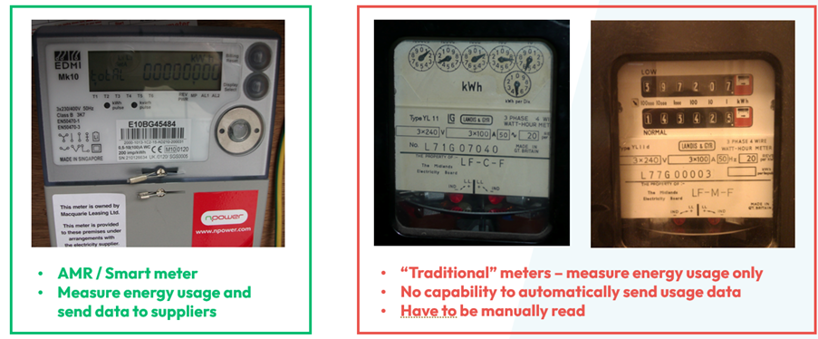
· Our pictorial guide below shows the difference between AMR (digital) and Traditional (analogue) electricity meters:
How this affects you
· AMR / Smart Meters – requirement changes from needing to obtain 1 read per month, to now recording usage every 30 minutes.
· Traditional meters – the billing settlement window is changing from 14 months to 4 months. This is an operational challenge for suppliers, who will now be aiming to obtain readings as a minimum once every quarter, rather than annually.
· Both changes are expected to have associated increases in costs, with more data being collected more frequently. Our analysis forecasts typical increases in meter costs due to MHHS to be between £100 to £200 per year.
· Although customers have always had the right to refuse swapping their Traditional meter for an AMR or Smart meter, under MHHS it is likely that suppliers will charge higher prices to Traditional meters, reflecting the higher labour costs involved in taking meter readings in-person.
How WME can help you
· If you have an AMR or Smart meter, simply login to myWME to view the Half-Hourly data collected from your meter, and take greater control of your energy usage.
· If you have a traditional meter, Contact Us to arrange swapping it for AMR. In some cases, where a straightforward exchange was not possible, we have been able to secure financial assistance of up to £500 to help customers with the costs of alterations to supply points that do not meet current regulatory standards.
· If you have any further questions about metering, energy usage data, or MHHS, please get in touch with us today.


